
Ready to buy? Open the product link
Fitbit Inspire 3 Review (2026): Midnight Zen/Black Specs, Battery, Sleep, and Who Should Buy It
I keep seeing people buy a smartwatch, wear it for a week, then leave it on the charger because they got tired of plugging it in every night. If that sounds familiar, the Fitbit Inspire 3 is probably closer to what you actually wanted.
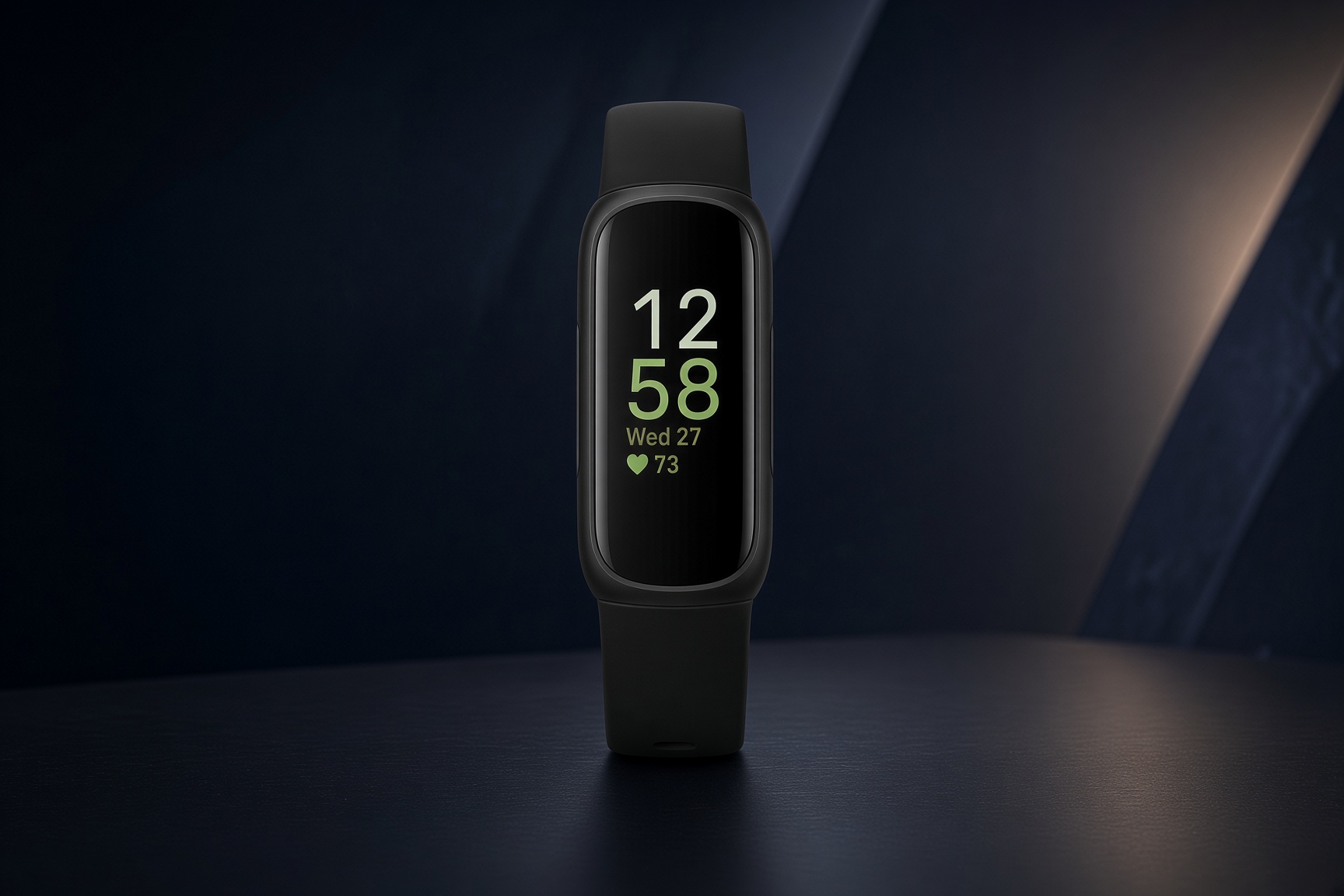
The Midnight Zen/Black one is the plain black version. List price is $99.95. On Amazon in the US it was recently down to about $93.99, and the box includes both the small and large bands plus three months of Google Health Premium. Buyers there have it at 4.2 out of 5 from close to 28,000 ratings, and it has been selling in real volume. That tracks. It is a small health band, not a training watch, and a lot of people are fine with that once they stop expecting it to be an Apple Watch.
TechforOwners verdict: 8.1/10 if you just want it on your wrist. Get it for sleep, stress, steps, and a battery that lasts most of the week. Leave it if you run or ride without your phone.
Quick specs
| Spec | Fitbit Inspire 3 (Midnight Zen/Black) |
|---|---|
| Type | Slim health and fitness tracker |
| List price | $99.95 (often discounted) |
| Display | Color AMOLED touchscreen, Corning Gorilla Glass 3 |
| Size / weight | 39.32 x 18.6 x 11.75 mm, 17.69 g |
| Battery | Up to 10 days; about 2 hours to full charge |
| GPS | Connected GPS only (phone required) |
| Water resistance | Up to 50 meters (5 ATM). Not for diving |
| Sensors | Optical heart rate, accelerometer, SpO2, skin-temperature variation |
| Exercise modes | 40+ with automatic exercise detection |
| Bands in box | Small (5.1 - 7.5 in) and large (6.3 - 8.7 in), silicone, tang buckle |
| Compatibility | iOS 16.4 or higher, Android 11 or higher, via Google Health app |
| Included membership | 3 months of Google Health Premium (activate in time; payment method required) |
What is actually in the box
Midnight Zen is a matte black strap and a dark case. From across a room it looks like a plain rubber band. That is a compliment. Nobody is going to ask you what watch you are wearing.
You get the tracker, a small band, a large band, and a charging cable. The cable is Fitbit’s little magnetic puck. An old Inspire 2 charger will not work, so do not toss this one in a drawer and forget which cable it is.
Small fits wrists from about 5.1 to 7.5 inches. Large covers about 6.3 to 8.7 inches. Most people can use one of the two that come in the box. The buckle is a basic plastic tang. Nothing fancy. Easy to tighten, easy to replace when the silicone starts looking tired.
Google lists the tracker at 17.69 grams. On a wrist that is light enough that you stop noticing it, which is the whole trick if you want sleep data. A band you take off at bedtime is just an expensive pedometer.
Wearing it all day
The screen is a small color AMOLED under Gorilla Glass 3. Time, date, heart rate, a few swipeable tiles. Texts and app alerts come through if the phone is nearby. You will not read a long message on it. You will see who pinged you, then pull the phone out. That is the deal.
There is no side button, unlike the Charge 6. You tap and swipe. The body stays thin because of that, and wet fingers are clumsier because of that. Before a shower or a swim, turn on water lock so the screen does not keep waking up.
The narrow band also stays out of the way of a shirt cuff. Compared with a 40 mm watch, this is the one you are more likely to still be wearing at 11 p.m. And the data only works if you actually leave it on.
The health stuff, which is why you buy it
This is a wellness tracker. It is not a doctor. None of the scores below are a diagnosis.
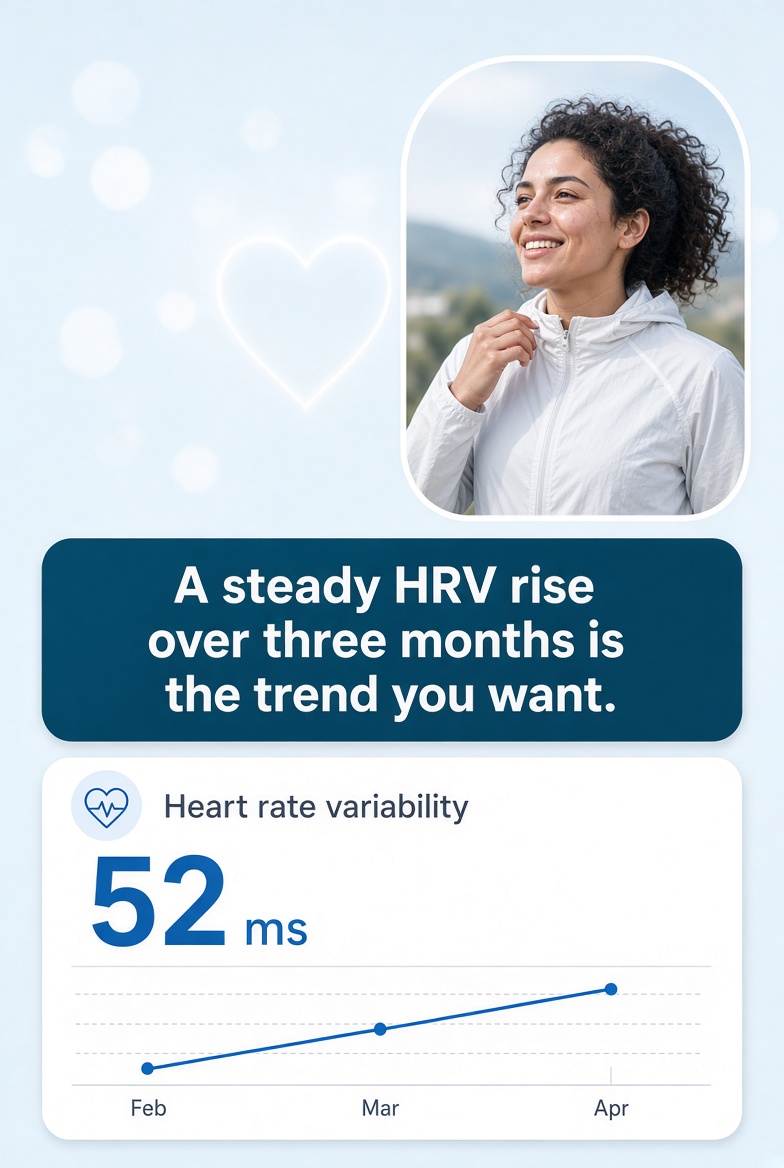
Heart rate runs all day and during workouts, and the app keeps a resting heart rate trend. You can get high and low alerts. If a number looks weird, check that the band is snug and that you feel fine before you panic. Loose fit and cold hands throw optical sensors off.
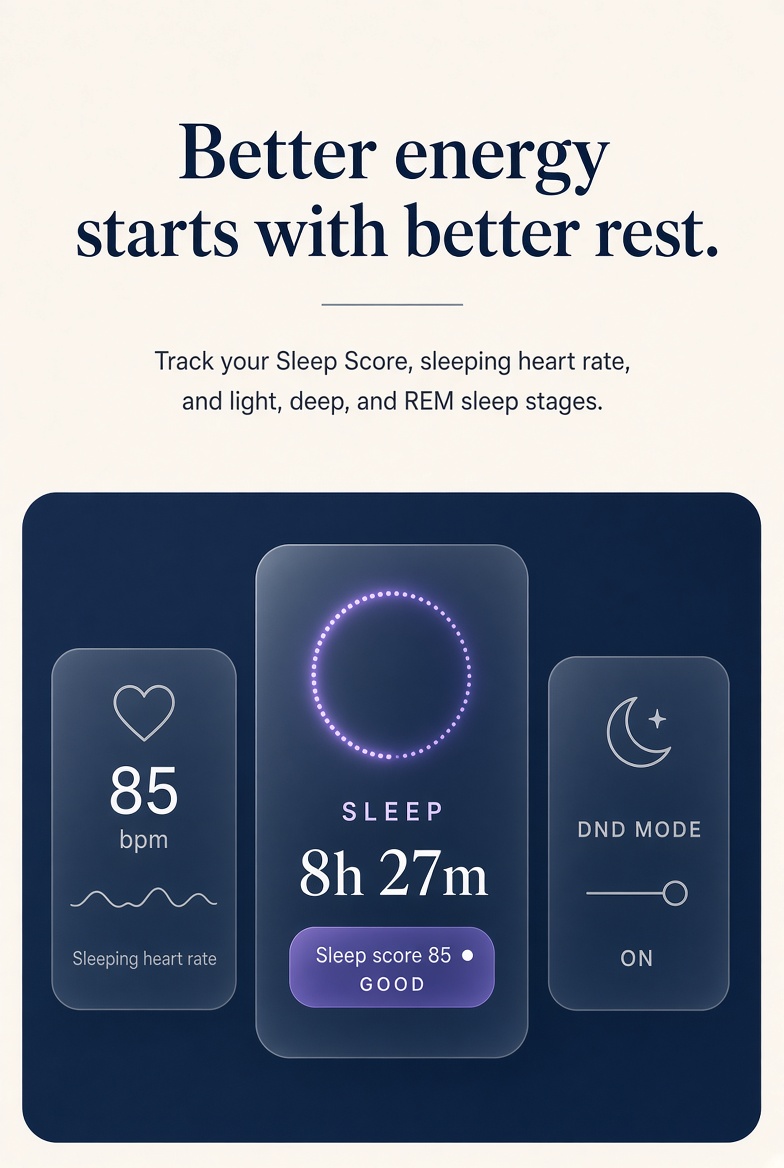
Sleep is the feature people stick around for. It estimates how long you were out, then splits the night into light, deep, and REM, and gives you a Sleep Score in the morning. There is a vibrating smart wake that tries to catch you in a lighter stage inside a window you set, plus a sleep mode that quiets things down. Wrist stage estimates are not a sleep study. They are good for noticing patterns: late dinner, a drink, a hard workout, a short night. Give it a couple of weeks before you trust the trend.
The Stress Management Score is a daily number built from heart-rate variability, sleep, and how hard you have been going. If it looks rough, the band can walk you through a breathing session. It cannot do the on-demand electrical stress scan you get on pricier Fitbits. No electrodes for that. Still useful as a “you have been wound up all week” nudge.
Overnight it can estimate blood oxygen and skin-temperature variation. SpO2 is a wellbeing figure, not a medical reading, and it is not turned on in every country. It also drinks a bit more battery. Cycle tracking lives in the app. Irregular heart rhythm notifications only exist in some countries, on some Fitbit models, and they are not meant for anyone under 22 or anyone who already has a known arrhythmia.
Daily Readiness is the “go hard or take it easy” number, pulled from recent load, sleep, and recovery. Everyday steps, heart rate, and sleep work without paying. The coach, the longer reports, and a lot of the guided content sit behind Google Health Premium.
Workouts, and the missing GPS
Steps, distance, calories, a reminder to move, and Active Zone Minutes. Zone minutes are the more honest metric. Ten minutes of actual cardio counts for more than a slow wander to the kettle.
There are 40-plus exercise modes, and it can spot common workouts on its own if you forget to start one. Pace and route need your phone. There is no GPS chip in the band.
That is the line. If you run, cycle, or hike and you do not want a phone in a pocket or a pack, this is the wrong Fitbit. The Charge 6, a Garmin, or a normal sports watch will do that job. If the phone is already with you, connected GPS is fine for walks and easy runs.
You also do not get tap-to-pay, an ECG app, Google Wallet, or the ability to send heart rate to gym machines. Those are Charge 6 features.
Battery and water
Google says up to 10 days, and a full charge takes about two hours. “Up to” means you are not hammering the screen. Always-on display, constant notifications, long workouts, connected GPS, and SpO2 all shorten it. In normal use a lot of people land closer to a week. Leave always-on on and you may be charging every few days. Even that beats a watch you have to dock every night, which is why the sleep tracking actually happens.
It is water resistant to 50 meters. Swimming is fine if water lock is on and you dry the band after. It is not a dive computer, and a long soak in a hot tub is a bad idea. Soap and salt will also age the silicone faster than plain water.
The app, and the trial you should not ignore
Setup is in the Google Health app. The old Fitbit app moved over in 2026. You need an iPhone on iOS 16.4 or later, or an Android phone on OS 11 or later, and a Google account.
This bundle includes three months of Google Health Premium. They want a card on file. The trial window is limited. Cancel before it ends if you do not want the bill. After that, Premium is about $9.99 a month or $99 a year.
Without paying, you still get steps, heart rate, sleep stages, a sleep score, a basic stress score, workout logging, phone alerts, and SpO2 or skin-temperature trends where those features are offered.
Premium adds the Google Health Coach in supported countries, the mindfulness and workout libraries, and the deeper trend write-ups. The band is useful if you never subscribe. Just do not let the trial roll over by accident.
Inspire 3 or Charge 6?
| Inspire 3 | Charge 6 | |
|---|---|---|
| Typical price | About $100 list | About $160 list |
| Weight | 17.69 g | About 30 g |
| Battery claim | Up to 10 days | Up to 7 days |
| GPS | Phone only | Built-in |
| Payments | No | Google Wallet |
| Extra sensors | HR, SpO2, skin temp | Adds ECG and EDA |
| Best for | Sleep, steps, low fuss | Runs and richer health tools |
Inspire 3 if you care about price, weight, and not charging it. Charge 6 if you want routes without a phone, contactless pay, or an ECG.
What I like, what I don’t
The good:
- Light enough that you forget it, including in bed
- Battery that usually covers most of a week
- Sleep score, stress score, and all-day heart rate at this price
- Both band sizes in the box
- A bright little color screen
- Fine for swimming
- Three months of Premium so you can see if the coach is worth it
The annoying:
- No built-in GPS
- No payments, no ECG, no on-demand stress scan
- Screen is too small for real notifications
- Odd charger you will lose once
- Some health features depend on the country
- The trial turns into a subscription if you ignore it
- The hardware is from 2022. The software is what has kept moving
Who it is for
Buy the Midnight Zen if you want a band you can ignore. Steps, sleep, resting heart rate, a daily stress nudge, phone already in your pocket. It is a solid first tracker. It is also a good gift for a parent who will not remember to charge a watch, and a decent travel backup.
Skip it if you train outside without a phone, if you want maps and payments on your wrist, or if you need an ECG or a clinical oxygen reading. Skip it if your wrist is outside that 5.1 to 8.7 inch range. And skip it if you are buying mainly for SpO2 or irregular-rhythm alerts and those features are not offered where you live.
One more thing if you are not in the US. A $94 Amazon price can look great until shipping and import fees land. On a Sri Lanka delivery, that same listing added about $119 in shipping and import charges. Check a local shop before you import it.
Is it worth the money?
At $99.95, this is the Fitbit I would tell a friend to buy if they do not need GPS. Under $90, it is an easy yes for the right person. The 4.2-star average across tens of thousands of ratings fits a product people keep using. The complaints are mostly the small screen, the subscription, and buyers who thought they were getting a smartwatch.
Bands are cheap to replace. The tracker is the purchase. Buy a spare charger if you travel. A lost cable is how these end up in a drawer.
FAQ
How long does the Fitbit Inspire 3 battery last?
Google says up to 10 days. With notifications and workouts, expect something more like 6 to 9. Always-on display can drop that to a few days. A full charge is about two hours.
Does the Inspire 3 have GPS?
Only through your phone. There is no GPS chip in the band.
Is the Fitbit Inspire 3 waterproof?
Water resistant to 50 meters, so swimming is fine with water lock on. It is not rated for diving, and Google does not call it waterproof.
Does it work with iPhone?
Yes. Google Health app, iOS 16.4 or later. Android needs OS 11 or later.
Do I have to pay for Google Health Premium?
Not for the basics. The box includes a 3-month trial. Cancel before it ends if you do not want it. After that it is about $9.99 a month or $99 a year.
What wrists does the Midnight Zen bundle fit?
Small band, 5.1 to 7.5 inches. Large band, 6.3 to 8.7 inches. Both come in the box.
Is the sleep tracking medical grade?
No. Stages and the Sleep Score are estimates for spotting trends. They will not diagnose sleep apnea or anything else.